CfP Natality — Technologies and Languages of Birth and Becoming
guest editors — Alexander Markov and Christina Schües
Deadline: deadline April 5, 2027 for issue 8:2 (June 2027)
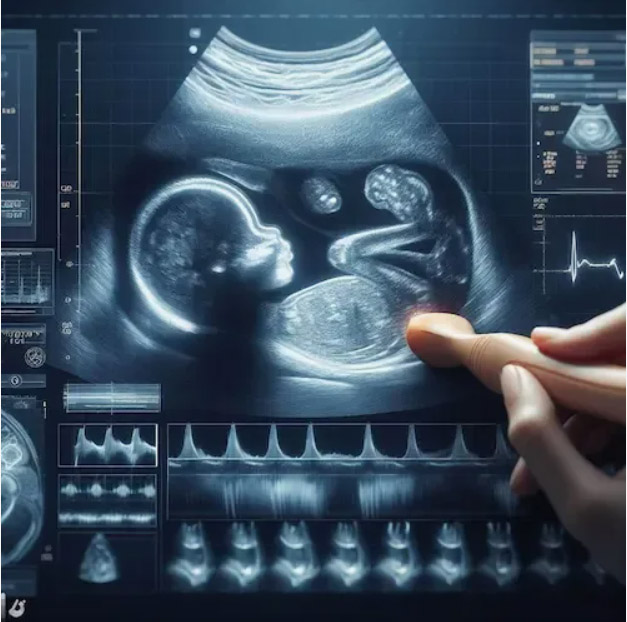
For the one who was «untimely ripped» by Caesarian section, Shakespeare asked whether he is «from a woman born» — a technical intervention transforming human-world relations, reshaping interhuman interaction, and rewriting the grammar of political legitimacy. In Lady Chatterley’s Lover, the debilitated men dream of «test-tube babies» that bypass the female body altogether. If the 'new comers' are genetically tested and even altered, how is their beginning relation with the (m)other and within society? More recently, popular imagination has been gripped by genetically screened «designer babies.» The idea of «natural birth» has become an elusive dream in light of the countless technologies — from prayer and ritual to ultrasound, surrogacy, and neonatal intensive care — that circumscribe the beginning of life.
And yet, «being born» distinguishes living processes from all that is technologically constructed. Persons are not artefacts. How does it affect the relation between human being and world if life begins in a laboratory, or if the first breath is drawn inside an incubator? Do technologies of natality alter society's conditions and relations? This special issue of Technology and Language shifts the lens of biopolitics from the governance of adult populations to what we call the «zero degree of corporeality» — the stage where the natural remains indistinguishable from the technical, and biology is inextricably intertwined with politics, law, and pedagogy.
From Embryo to Citizen
Contemporary biopolitics scholarship, following Michel Foucault, has focused on the management of populations and the disciplining of adult bodies. We propose a radical ontological shift: from phylogenesis (the metaphor of the social contract) to ontogenesis — the individual’s physiological and pedagogical history. How does a living being's transition from a «state of nature» to a «civil state,» from medicalized state to a political subject state not as a philosophical fiction, but as a concrete, mediated, and contested process?
We invite interdisciplinary contributions that explore natality as a critical nexus where technologies, medicine, law, and pedagogy converge to produce the modern citizen — or, as early modern philosophers put it, the ens politicum (political animal). We are particularly interested in the long eighteenth century (ca. 1650−1800), when the foundations of modern biopolitics were laid, but we strongly encourage papers that extend this inquiry into the 19th, 20th, and 21st centuries — including contemporary cases of bioengineering, reproductive technologies, neuroscience, and post-Soviet or non-Western sociotechnical experiments.
Potential Topics (illustrative, not exhaustive)
1. Perinatal Biopolitics of the Early Modern Period
Philosophy of medicine, political embryology, and early childhood pedagogy in the European city of the Enlightenment. How did physicians, midwives, and magistrates negotiate the status of the unborn? Did the experiences of the women — the only witness in the beginning of pregnancy — count?
2. «Expert» Conflicts over the Body
Corporative struggles (physicians vs. surgeons vs. midwives vs. women/families) for control over the fetal and neonatal body. The emergence of narrative medicine, forensic expertise, and fetal surgery.
3. Languages of Life: Statistics, Cameralism, and Natural Law
Politico-arithmetical sciences, theories of the state of nature (Hobbes, Cumberland, Pufendorf), and their surprising links to embryological and physiological models.
4. Maternity, Affect, and Imagination
Cultural histories of pregnancy and childbirth. Debates on maternal imagination (the «maternal impression») and its influence on the fetus. Representations of the female body (vs. male body) in medical and didactic texts.
5. Pedagogy and the Politics of Early Childhood
From Comenius’s utopias to the education of «unnatural» children (deaf-mute pedagogy, teratology, the handling of «monsters»). The continuum of prenatal, perinatal, and neonatal care as a site of governance.
6. Socio-Technical Experiments in Ideocratic Regimes
Late Soviet and post-Soviet cases of subject construction: pedagogical experiments, club movements, «soul repair» techniques, organizational mimicry. How did Marxist vitalism shape technologies of the self and society?
7. Technologies of Novelty and the Anthropology of the Future
Philosophical and anthropological concepts of novelty, time, and becoming — from Middle Eastern and non-Western contexts to transhumanist imaginaries of self-reproducing machines.
8. Critical Reassessments of Biopolitics
Arendt, Foucault, Agamben, Esposito — revisited in light of reproductive technologies, gender studies, posthumanism, and disability studies.
Important dates:
Extended abstracts (500−800 words) are welcome ideally by October 1, 2026, the deadline for full papers is April 5, 2027. Publication: June 30, 2027 (Vol. 8, No. 2).
For inquiries and guidelines, please contact Daria Bylieva (soctech@spbstu.ru) or Alfred Nordmann (nordmann@phil.tu-darmstadt.de).